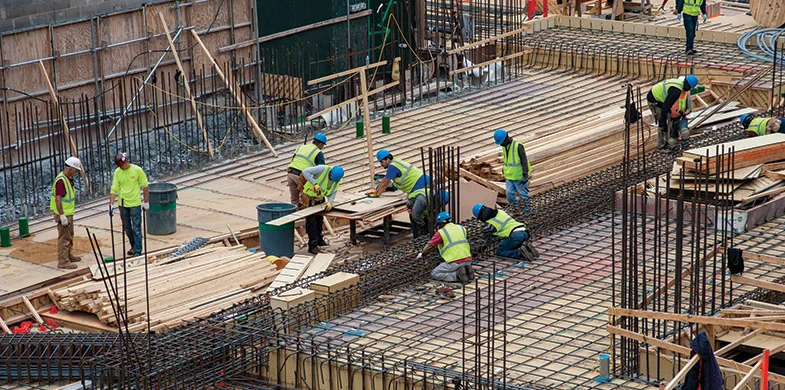
Step onto any construction site, and you’ll immediately notice the visible safety measures. Hard hats, safety glasses, harnesses, warning signs, equipment inspections, and pre-task planning are all part of the daily rhythm on site. Over the last several decades, we’ve made tremendous progress in reducing injuries through better training, stronger processes, and greater commitments to protecting workers.
There’s another risk on nearly every jobsite that receives far less attention. Most of the time, it’s a risk nobody sees until it’s already affecting performance, decision-making, or well-being. Where’s the danger? It’s in the mental and emotional weight people carry long before anyone walks onto a jobsite or we see they’re struggling.
For years, conversations about safety and conversations about mental health have happened in different parts of an organization. Safety teams focus on physical hazards. Human resources focuses on employee well-being. We’ve kept them separated, but the reality is that those two worlds overlap far more than most organizations realize.
When someone is carrying chronic pain, struggling at home, exhausted, or simply trying to hold it all together, those challenges don’t stay in the parking lot. They follow people onto jobsites, influencing their focus, communication, awareness, judgment, and ability to respond when something unexpected happens. The more time we spend working alongside contractors, safety leaders, and business owners, the more we see the need to include mental health in every safety conversation.
Beyond The Injury
Much of our work in safety focuses on preventing physical injuries, and for good reason. Every injury impacts a worker, their family, their team, and the organization as a whole. What often gets overlooked, though, is that the impact of an injury extends far beyond the physical recovery.
For many, work is more than a job. It’s a source of pride, purpose, and identity. Many learned their craft from a parent, grandparent, mentor, or longtime coworker. Over time, the work becomes part of who they are. It’s how they provide for their family, contribute to their team, solve problems, and earn the trust and respect of those around them.
When an injury suddenly takes that away, even temporarily, the challenge can become much bigger than the injury itself. The immediate concern may be physical recovery, but it doesn’t take long for other questions to surface. How long will I be out? Will I be able to do the work the same way again? What happens if I can’t? How will this affect my family, my future, or my place on the team?
Those questions rarely appear on an incident report, but they are real. This also contributes to why conversations about mental health can be difficult in the trades. People who have spent years being dependable, resilient, and self-sufficient often struggle when they find themselves in a position where they can’t contribute the way they’re used to.
When those concerns go unaddressed, the effects can linger long after the physical injury has healed. That’s why supporting employees means looking beyond the injury itself and recognizing the person experiencing it. The physical recovery may be what brought them to the situation, but the emotional and mental impact often shapes what comes next.
The Desire To Push Through
Many workers have spent years learning how to push through adversity. They show up when they’re tired, work through discomfort, and find solutions when things get hard. Those qualities help people succeed in demanding environments, but they can also make it harder to acknowledge when support is needed.
What’s interesting is that most workers would do almost anything for a coworker who was struggling. They’d listen, check in, and help any way they could. The challenge isn’t a lack of compassion; it’s that many people find it easier to help someone else than to ask for help themselves.
This is Where Burnout Enters the Conversation…
Many workers are comfortable saying they’re stressed, tired, or burned out. Those words are familiar, and they imply hard work. Frankly, they fit within these cultures. Talking about anxiety, depression, isolation, or emotional exhaustion can feel very different, even when those experiences are contributing to the same outcome.
The body, however, doesn’t care what label we use. Lack of sleep affects reaction time. Chronic stress affects concentration. Ongoing pain affects mood and decision-making. Emotional exhaustion affects communication. Over time, these challenges begin influencing the same workplace outcomes that safety programs are designed to improve.
This connection becomes especially important in industries where mistakes carry significant consequences. A lapse in attention, a missed detail, poor communication, or a rushed decision can impact not only the individual involved but everyone working around them.
That reality is one reason trust plays such a critical role in safety culture. People speak up when they trust the people around them. They report concerns when they believe they’ll be heard, and they ask questions when they know they won’t be pushed off. Most importantly, they admit mistakes when they feel safe enough to do so.
The strongest safety cultures aren’t built solely through policies and procedures. They’re built through relationships. Workers pay close attention to what leaders prioritize, how they respond when concerns are raised, and whether people are treated with respect when they speak up. Over time, those daily interactions shape whether employees feel comfortable sharing concerns before they become bigger problems.
At Kraus-Anderson Insurance, we’ve seen firsthand that the most effective safety programs look beyond compliance alone. They recognize that every employee brings their own pressures, responsibilities, challenges, and experiences to work each day. The companies that consistently create safer environments understand that protecting people means paying attention to both the hazards everyone can see and the challenges that often remain hidden.
The future of workplace safety will always include better training, stronger processes, and improved equipment. It will also require a deeper understanding of the people doing the work. Because sometimes the greatest safety risk on a jobsite isn’t the one standing directly in front of us.
It’s the burden someone has been carrying for months that nobody knew was there.
Kylie Vatthauer, Senior Safety Specialist | MS, MPH, ACSM EP-C, CPH